

Create Interactive Smart Classrooms
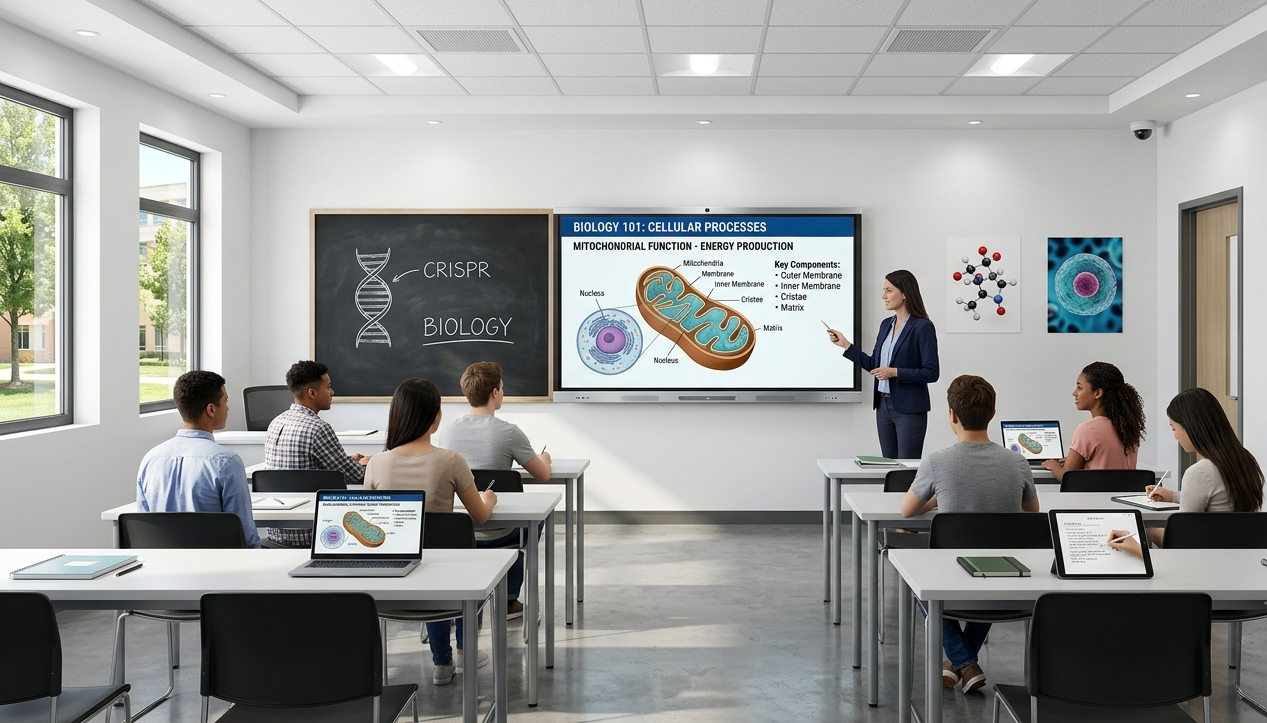
Modern classrooms are becoming more collaborative and engaging. Interactive digital boards, wireless presentation systems, digital podiums, projectors, and hybrid learning tools help teachers explain concepts more effectively while encouraging student participation.
For example, a science teacher can display interactive 3D models, annotate directly on the screen, play educational videos, and instantly share notes with students after the lesson. Instead of spending valuable class time writing on a traditional board, teachers can focus on delivering richer learning experiences.
Smart classrooms also support remote learning, guest lectures, online workshops, and digital assessments, making education more flexible and future-ready.
The objective isn’t to replace teachers with technology—it is to provide teachers with better tools to make learning more engaging.
Improve Campus Safety and Security
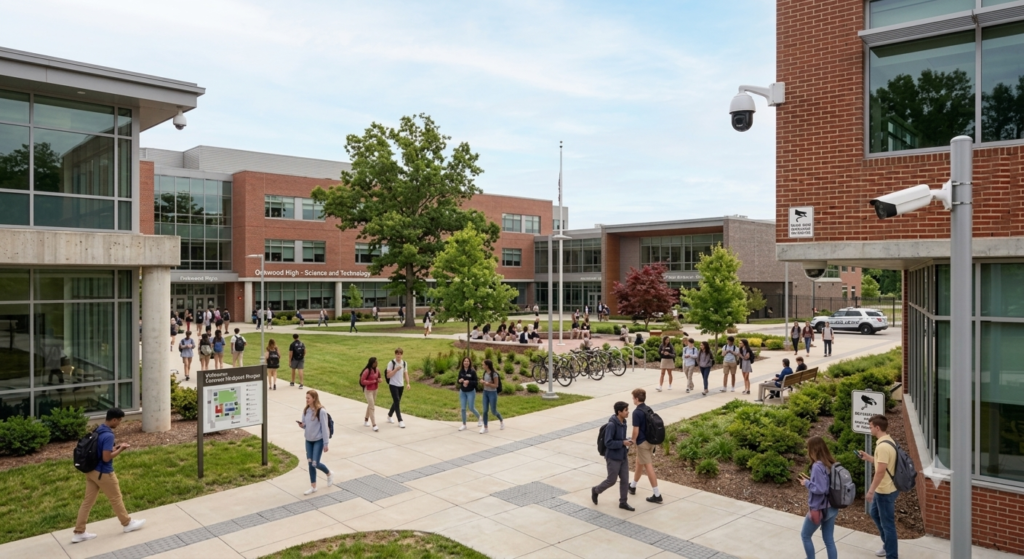
A secure campus builds confidence among parents, students, and staff.
Modern campus security extends far beyond installing CCTV cameras. Schools today can integrate surveillance, visitor management, access control, public address systems, and school bus monitoring into a unified security ecosystem.
High-definition CCTV cameras help monitor classrooms, corridors, entrances, playgrounds, laboratories, libraries, and parking areas. School buses equipped with GPS tracking and onboard CCTV improve student safety during transportation while allowing administrators to monitor routes and respond quickly to unexpected situations.
Public address systems and digital communication tools also play an important role during emergencies by enabling instant campus-wide announcements.
Technology cannot replace responsible supervision, but it can provide administrators with the information they need to make faster and better decisions.
Digitize School Administration
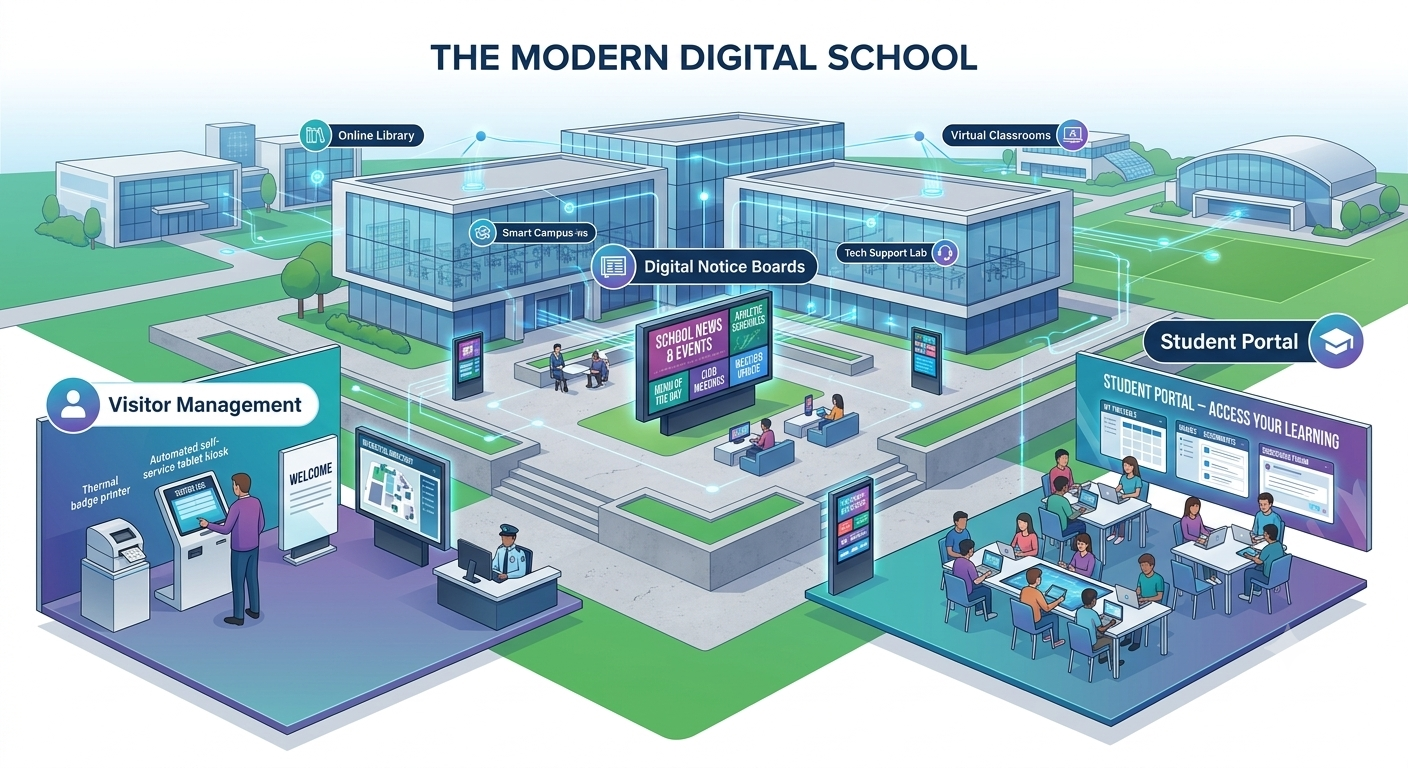
School administration involves thousands of routine tasks every academic year—from attendance and fee management to parent communication and staff coordination.
Digitizing these processes saves time, reduces paperwork, and improves accuracy.
A modern institution can benefit from integrated solutions such as student and parent portals, employee attendance systems, digital notice boards, online circulars, fee management, and automated notifications.
Instead of parents calling the office to check attendance or exam schedules, they can receive updates through a secure portal or mobile application. Teachers spend less time on administrative work, allowing them to focus more on teaching.
Digital notice boards placed at entrances, reception areas, or academic blocks can instantly display announcements, examination schedules, event updates, achievements, and emergency notifications, eliminating the need for printed notices.
Plan Technology for Long-Term Growth
One of the biggest mistakes educational institutions make is purchasing technology one product at a time without an overall strategy.
A new CCTV system is installed this year, a digital classroom next year, and a biometric attendance system later—often from different vendors using different platforms. Over time, managing and maintaining these disconnected systems becomes difficult and expensive.
A better approach is to develop a long-term technology roadmap.
By working with a single technology partner, schools and colleges can ensure that networking, surveillance, classroom technology, communication systems, cybersecurity, backups, and future expansions are designed to work together.
This not only reduces maintenance challenges but also helps institutions make better use of their technology investments.
Final Thoughts
A smart campus is not defined by the number of digital devices it owns. It is defined by how effectively technology supports learning, protects students, simplifies administration, and prepares the institution for future growth.
Whether it’s enterprise campus Wi-Fi, smart classrooms, school bus GPS tracking, CCTV surveillance, digital notice boards, student portals, or employee attendance systems, every technology should contribute to one common goal—creating a safer, smarter, and more connected educational environment.
At Teknikl, we help schools, colleges, and educational institutions design and implement complete IT solutions tailored to their academic and operational needs. From campus networking and smart classrooms to surveillance, cybersecurity, and digital transformation, we build technology ecosystems that grow with your institution.

Not only will a network administrator keep you safe, but you will not have to waste as much time going through unwanted emails. Protect yourself before the inevitable happens.